Feng Shui Bedroom: 15 Rules for Better Sleep and Energy
Your bedroom is the most important room in feng shui. 15 practical rules for layout, colors, bed placement, and what to remove for better sleep.
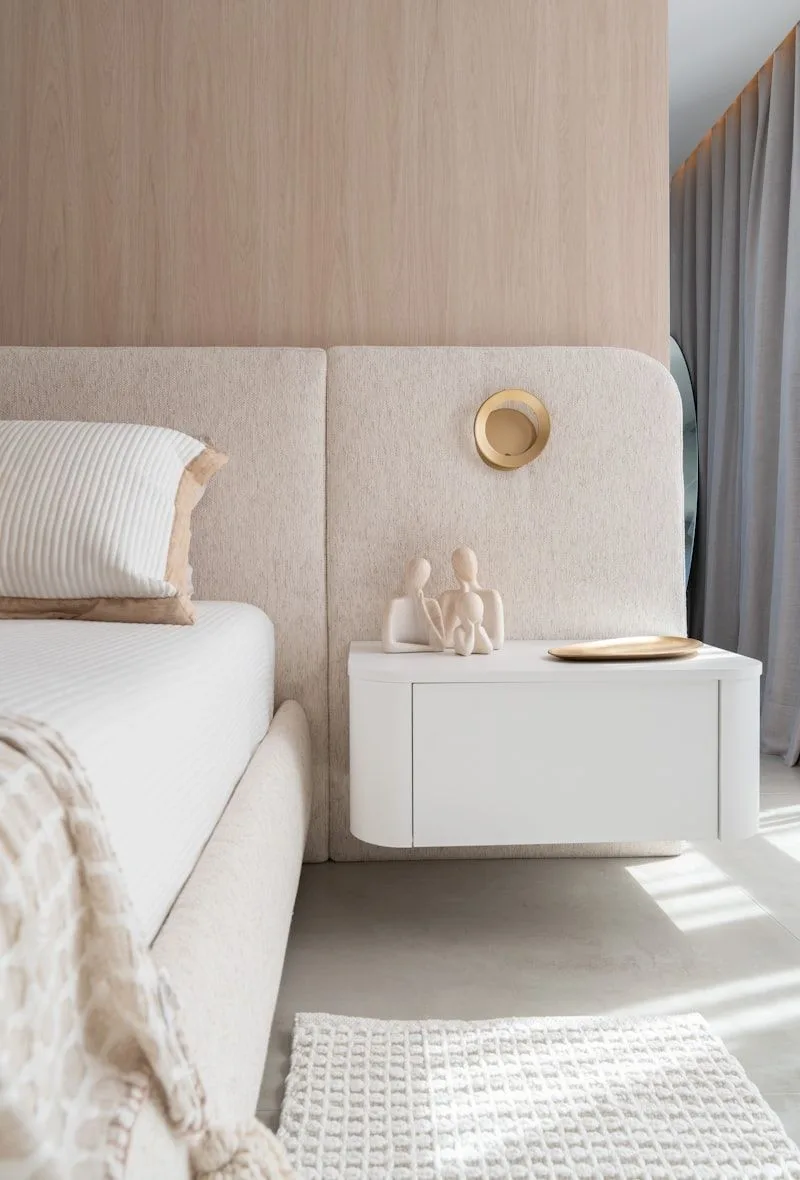
You spend roughly a third of your life in your bedroom. In feng shui, this makes it the single most important room in your home. The bedroom governs not only sleep quality but also your romantic relationship, your health recovery, and the first energy your body absorbs each morning.
This is not about making your bedroom look like a feng shui catalog. It is about 15 specific, practical rules. Each one stands alone. Apply the ones that fix problems you actually have.
1. Put the bed in the command position
The command position is the most important rule in feng shui. For the full reasoning behind it, see our feng shui basics guide. In the bedroom, it means your bed should be placed so you can see the door while lying in bed, but not be directly in line with it. The ideal position is diagonal from the door, against a solid wall, with the headboard touching the wall.
A bed in the command position gives you a subconscious sense of safety. You can see who enters without being startled. A bed directly in line with the door (the “coffin position”) sends the opposite signal: vulnerability, exposure.
If your room layout makes the command position impossible because of windows or closet doors, use a mirror to reflect the door so you can see it from the bed. The mirror should be placed on the wall facing the door, not on the ceiling or directly facing the bed.
2. Have a solid headboard
A solid headboard, attached to the bed frame and placed against a wall, provides support. Symbolically, it represents stability in your relationship and a protected head while you sleep.
What does not work: a headboard made of bars or slats with gaps, a headboard that is not attached to the bed, or no headboard at all. These create a sense of instability. A padded fabric headboard is ideal. Wood is good. Metal slats with open space between them weaken the feeling of support.
3. Use a mattress and bedding on the floor is not a bed
A mattress directly on the floor has no headboard, no frame, and no airflow underneath. In feng shui, energy (qi, 氣) needs to circulate. A mattress on the floor stagnates qi and pulls your energy downward. Practically, it also collects dust and moisture. Get a bed frame with space underneath for air circulation. The frame does not need to be expensive. It needs to lift the mattress off the ground.
4. Remove the television
A television in the bedroom is an active electronic device that emits electromagnetic fields, produces light, and invites the outside world into the space meant for rest and intimacy. In feng shui, the bedroom is a yin space: quiet, dark, restorative. (See our yin and yang guide if these terms are new.) A television is yang: active, stimulating, outward-facing.
If removing the television is not possible because of space constraints, cover it when not in use. A fabric cover or a cabinet with doors that close. The goal is to make the screen invisible at night so the room reverts to a rest space.
5. No work in the bedroom
A desk, a laptop, work papers, a treadmill — anything associated with productivity, stress, or deadlines — belongs in another room. The bedroom has one job: restoration. When work objects share the space, your mind cannot fully switch off. This is not superstition. It is basic sleep hygiene that feng shui formalized a thousand years before sleep science existed.
If you live in a studio apartment and have no choice, use a room divider or a curtain to visually separate the work zone from the sleep zone. The visual boundary tells your brain that work is over.
6. Two bedside tables, not one
A pair of matching bedside tables, one on each side of the bed, signals balance and equality in a romantic relationship. A single bedside table on one side, with the other side empty or against a wall, creates asymmetry. If you are single and want to stay that way, a single table is fine. If you want a partner, leave space for one by placing a table on both sides.
The tables do not need to be identical down to the millimeter. They should be roughly the same height, each with a lamp, so the visual weight is balanced.
7. Keep the space under the bed clear
The area under the bed should be empty or contain only soft, sleep-related items: extra bedding, pillows, blankets. What should not be under the bed: shoes, luggage, old paperwork, exercise equipment, anything sharp or heavy, anything you are “storing” because you do not know where else to put it.
Energy circulates around your body while you sleep. Objects stored under the bed — especially objects associated with movement (shoes), travel (luggage), or unfinished business (paperwork) — represent restless energy pressing up into your sleep. If you must store things under the bed, use soft fabric bins and limit them to one layer. No plastic bins, no boxes stacked three deep.
8. Choose restful colors
The bedroom is a yin room. Its colors should be yin: soft, muted, recessive. Good choices: warm whites, beiges, soft grays, dusty blues, muted greens, pale lavenders. These colors recede and let the mind settle.
Colors to avoid in large areas: bright red (too activating, associated with the fire element), bright orange, bold patterns, large expanses of black (too heavy for a rest space). Small accents in these colors are fine. A red throw pillow does not ruin the room. Red walls do.
9. Remove or cover mirrors facing the bed
A mirror facing the bed is one of the oldest feng shui taboos. The traditional explanation is that mirrors bounce energy around the room, keeping it active when it should settle. A more practical way to think about it: a mirror facing the bed catches movement in the dark. Your peripheral vision registers something shifting, even if your conscious mind does not, and your nervous system stays slightly alert.
If your bedroom has mirrored closet doors facing the bed, hang curtains over them. If you have a wall mirror you cannot remove, cover it at night with a cloth. A mirror on a wall perpendicular to the bed, where you cannot see your reflection while lying down, causes no problem.
10. No water features or water images
Water in the bedroom is believed to weaken financial stability in traditional feng shui. The logic is associative: water flows away. Sleep is when you are most energetically vulnerable, so water imagery in this room suggests resources draining while you rest.
Practically: remove fountains, aquariums, and images of oceans, rivers, or waterfalls. If you love water imagery, place it in the bathroom or the living room, where water energy belongs. A small glass of water on the bedside table for drinking during the night is fine. The scale matters: a drinking glass is not a water feature.
11. Close the bathroom door
If your bedroom has an attached bathroom, the door to the bathroom should stay closed at night. In feng shui, bathrooms are drains — literally, energy drains. An open bathroom door while you sleep is said to siphon energy from the bedroom, and by extension, from your health and relationship.
Keep the bathroom door closed. Keep the toilet lid down. These are zero-cost adjustments. If the bathroom door faces the bed directly, add a full-length mirror on the outside of the bathroom door to deflect the energy back into the bedroom. The mirror should reflect the bedroom, not the bathroom.
12. Limit electronics
Each electronic device in the bedroom is a small yang presence: a glowing LED, a faint hum, an electromagnetic field. Remove anything you can. Phones should be kept out of the bedroom entirely or placed at least six feet from the bed, ideally in a drawer.
Clock radios, air purifiers, white noise machines — pick the one you genuinely need and remove the rest. If you charge your phone overnight, charge it in another room. Use a basic alarm clock instead. The bedroom should be the room with the fewest devices in in your home.
13. Bring in the right art
Art in the bedroom should be calm, personal, and paired if you share the bed. Landscapes, abstract pieces in restful colors, botanical prints — these work. What does not work: images of single figures (suggest solitude), aggressive or chaotic imagery, art that you keep meaning to replace but have not gotten around to, and anything you actively dislike.
Above the bed, avoid heavy framed art or shelves that feel precarious hanging over your head while you sleep. A lightweight canvas or a textile piece above the bed is safer and more restful.
14. Use soft, layered lighting
The bedroom should never have a single overhead light as its only light source. Overhead lighting flattens the room and makes everything feel like an operating theater. Use at least two sources at different heights: bedside lamps at sitting height, a floor lamp in a corner, perhaps a dimmable overhead fixture you almost never use at full brightness.
Warm light (2700K, the temperature of incandescent bulbs) is correct for a bedroom. Cool light (4000K+) belongs in kitchens and offices. Salt lamps, while popular, are not a feng shui requirement — their value is the soft amber light, not the salt. Any warm, dim light source accomplishes the same thing.
15. The bedroom is for two things
Traditional feng shui is blunt about this: the bedroom is for sleep and intimacy. Nothing else. No eating, no working, no arguments, no screen time in bed. This is not puritanism. It is about conditioning your nervous system. The more activities you do in bed, the weaker the association between bed and sleep becomes.
If you do one thing from this list, do the command position. Move your bed so you can see the door without being in line with it. That single change affects every night you spend in the room from this point forward.
Read next: the feng shui basics guide for the foundational concepts behind these rules, or the bagua map guide to understand where your bedroom falls on the energy grid.